
I, Samantha, grew up believing that the 200-year-old tree would outlive all of us.
My great-great-grandfather, Simon, planted that giant sequoia in our yard not long after he came to America. According to family stories, he didn’t have much, just a small patch of land and a stubborn belief that if he put something down deep enough, it would last.
That tree became proof of that.
Every generation in my family had a photo taken standing in front of the sequoia. Weddings, birthdays, random Sunday afternoons — someone always ended up posing against that trunk.
To our family, it wasn’t just a tree. It was a symbol and a reminder that no matter what hardships life threw at us, we’d endure.
While it was history for us, to my neighbor Roger, it was apparently a personal inconvenience.
For the past few years, he’d made that very clear.
“Your sequoia roots are spreading into my yard.”
“Because of your sequoia, bugs are ruining my flowers.”
“Your sequoia blocks the sun, and I’m not getting my daily dose of vitamin D!”
That last one, he actually shouted over the fence while I was watering my plants.
At first, I tried to find a peaceful solution.
“We’ll trim the branches on your side so they won’t bother you,” I said calmly.
And we did. I hired a crew, paid more than I wanted to, and made sure everything on his side was neat and clean.
But Roger didn’t calm down. He came back even angrier.
“I WANT YOU TO CUT THE SEQUOIA DOWN! It’s ruining the look of the neighborhood.”
I just stared at him.
We lived on a street where three houses had mismatched fences, and one guy still had Christmas lights up in March. But sure, the problem was my 200-year-old tree.
After that, I stopped engaging. We’d already done everything we could, so I chose to ignore him.
Life went on.
Or at least, it did until we left for vacation.
We were gone for a week — just a simple trip with my daughters, Lily and Emma.
When we pulled back into the driveway, I knew something was wrong before I even turned off the engine.
The yard looked… empty.
I stepped out slowly, already feeling sick.
And then I saw it.
The sequoia was gone.
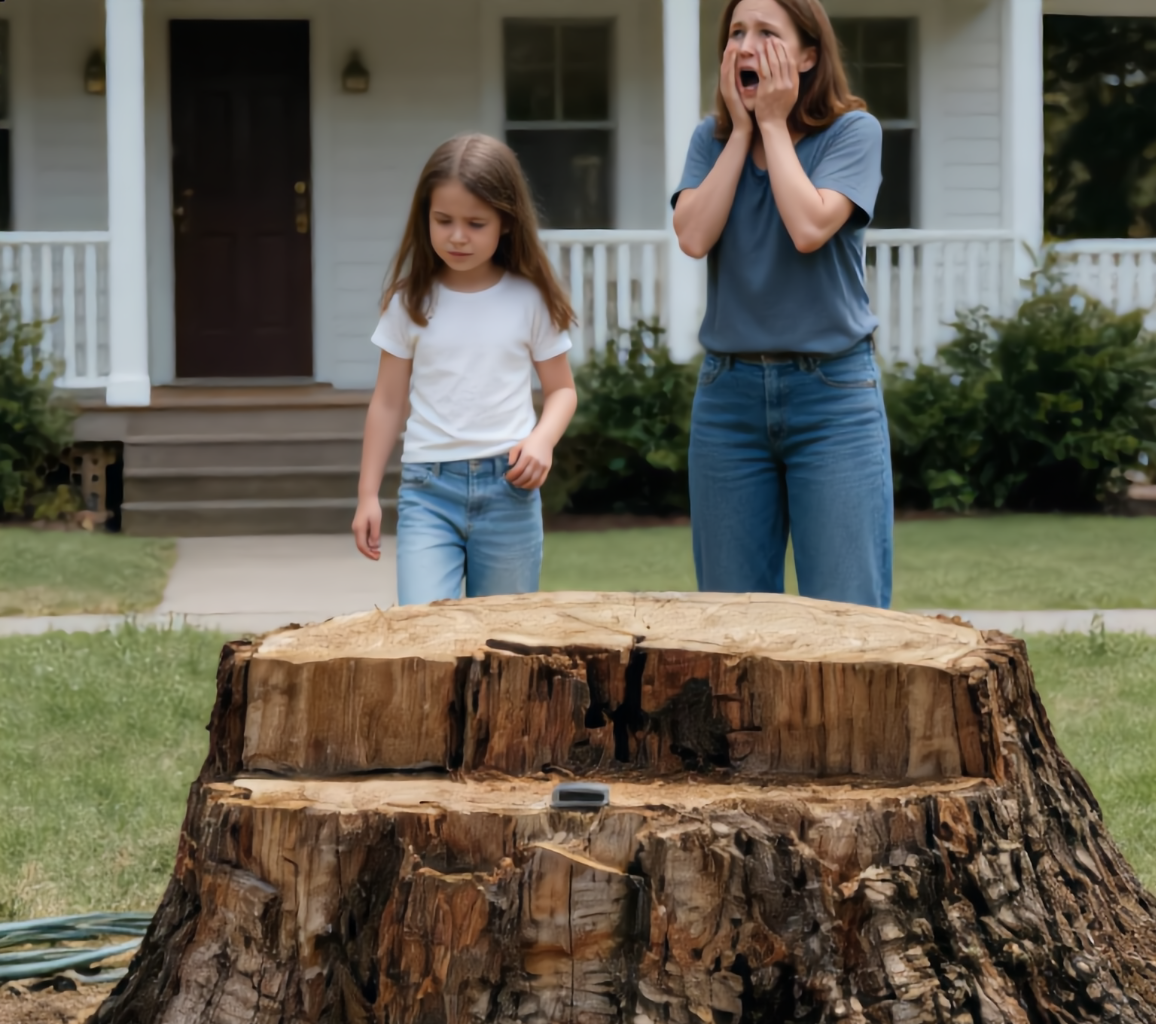
Not trimmed. Not damaged. Gone.
Lily stood beside me. “Mom… where’s the tree?”
I didn’t answer.
There were deep tire tracks across the yard. Piles of reddish sawdust scattered everywhere.
All that was left was a jagged stump.
Emma started crying.
“So, did your tree disappear?”
I turned.
Roger stood there, smug.
And in his hand… a luxurious wooden cane.
The color was unmistakable — the same deep reddish tone as the sequoia.
“What did you do?” I asked.
He shrugged. “Me? Nothing. YOU did this when you ignored my requests.”
He tapped the cane and walked away.
That night, I couldn’t sleep.
Then I came up with a plan.
The next evening, I knocked on Roger’s door with a smile, holding a neatly wrapped frame.
“Thought I’d start over,” I said.
He let me in.
Inside, I immediately knew.
The house smelled like fresh wood.
New shelves. A new coffee table.
All in that same reddish tone.
Pieces of my tree.
“You’ve been redecorating,” I said.
“Yeah,” he replied too quickly.
I smiled and handed him the gift.
Inside was a collage — old family photos taken in front of the tree. Generations of us.
At the bottom, a plaque read:
“Before it was yours.”
“This wood—” he started.
“—came from the stump you left behind,” I said.
“You’ve got some nerve.”
“I thought you’d appreciate the craftsmanship.”
As I left, I added quietly:
“My family’s story will be heard. People like stories.”
Phase one was never about him understanding.
It was about him reacting.
Phase two was about everyone else.
The next day, I invited neighbors over for coffee.
I laid the photos out casually.
“Found some old family pictures,” I said.
They admired them.
“That tree’s been here forever!”
“What happened to it?”
I paused, then said softly:
“It’s gone. All that’s left are a cane and furniture in Roger’s house.”
Silence.
They understood.
The story spread.
Neighbors whispered. Conversations drifted.
Roger started noticing.
Whenever he stepped outside, people went quiet.
He hated that.
A week later, the neighborhood hosted a gathering.
Theme: “Honoring old homes and their history.”
They asked me to speak.
I told the story of my great-great-grandfather.
Of planting something meant to last.
Of generations growing around it.
Then I ended with:
“Some things take generations to grow… and only minutes to lose.”
Applause followed.
Roger stood off to the side, staring at the ground.
The next morning, he knocked on my door.
No cane. No smirk.
“I… might’ve gone too far,” he said.
Not quite an apology.
But close enough.
I nodded.
Then handed him a pair of work gloves.
“We’re planting a new one,” I said.
“A smaller tree. Better placed. This time, we do it right.”
He hesitated.
Then nodded.
That weekend, the whole neighborhood showed up.
We planted the new tree together.
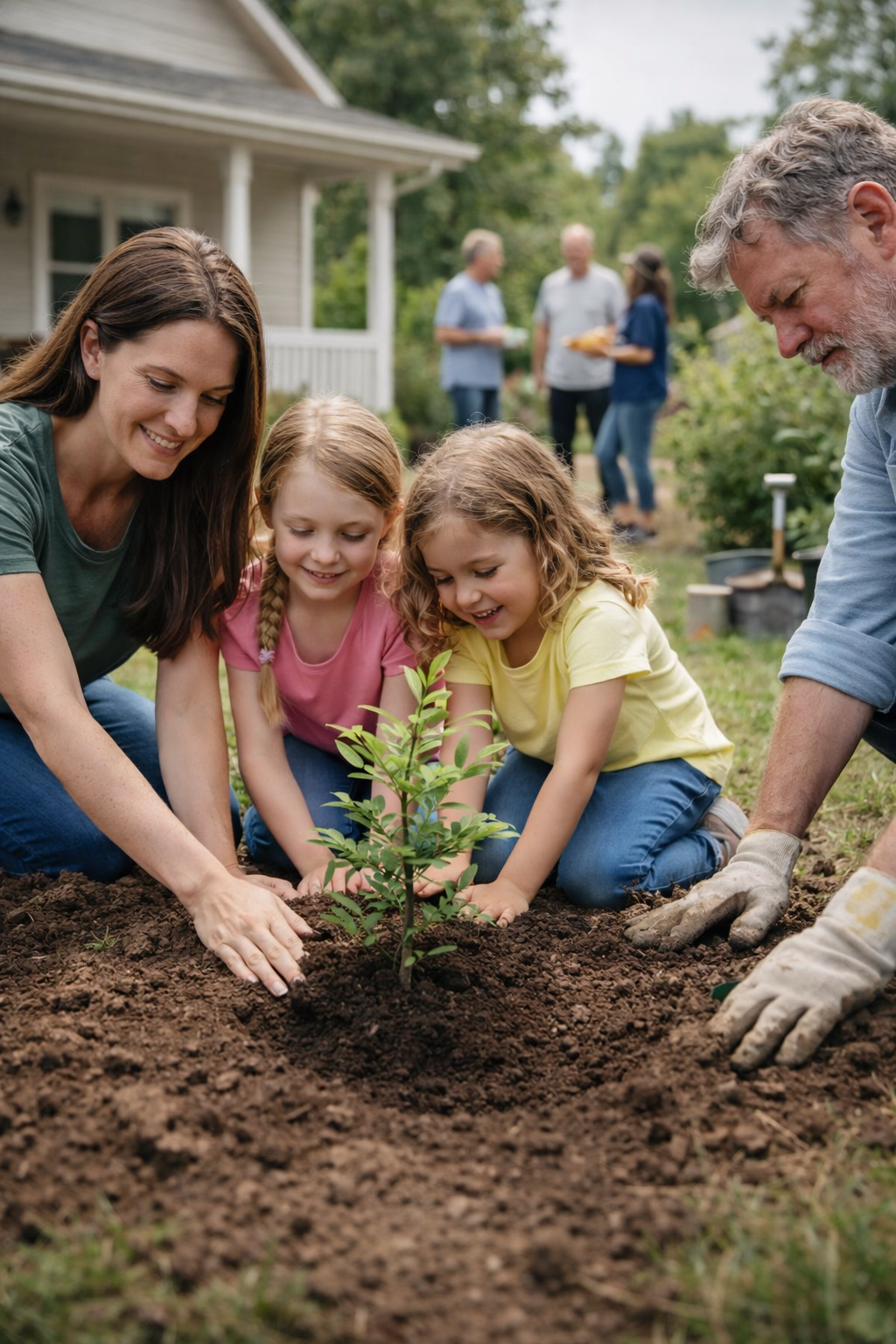
Roger worked quietly.
No complaints.
At one point, he looked at it.
“Think it’ll last?” he asked.
I smiled.
“Only if we let it.”
For the first time, it didn’t feel like something had been taken.
It felt like something new had begun.
Source: amomama.com