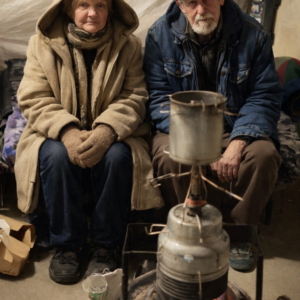

School was the worst stretch of my life. I tried so hard, but one teacher made sure I never left her class smiling. Even now, I don’t understand what she gained from embarrassing me in front of everyone.
Mrs. Mercer was the teacher. She mocked my clothes. Called me “cheap” in front of everyone like it was a fact worth recording. And once, she looked right at me and said, “Girls like you grow up to be broke, bitter, and embarrassing!”
I was just 13. I went home and didn’t eat dinner that day. I didn’t tell my parents because I was afraid Mrs. Mercer would give me an F in my English class. And to make matters worse, some classmates were already teasing me for my braces.
I didn’t want to make it any bigger than it already was.
The day I graduated, I packed one bag and left that town. I told myself I was never going to think about Mrs. Mercer again. Years later, life brought me somewhere new. I built something steady there. A home. A life. A future.
So why, all these years later, was her name back in my life?
It started with Ava coming home quiet. My daughter is 14, sharp as a tack, and she always has something to say about everything. So when she sat down at the dinner table and just pushed her food around, I knew something was wrong.
“What happened, sweetie?” I urged.
“Nothing, Mom. There’s this teacher.”
I set down my fork. Ava told me, in pieces, about a teacher at school who’d been picking at her in front of everyone. Calling her “not very bright” and making her feel like a punchline.
“What’s her name?”
Ava shook her head. “I don’t know yet. She’s new. Mom, please don’t go to school.” Her eyes widened. “The other kids will make fun of me. I can handle it.”
Ava couldn’t handle it. I could see that just by looking at her.
I sat back. “Okay… not yet.”
But I was already certain of one thing: this felt too familiar. And I wasn’t going to sit still for long.

I decided to meet this teacher myself. But the very next day, I was diagnosed with a bad respiratory infection and put on strict bed rest for two weeks. My mother drove up that same evening with a casserole and a look that told me not to argue.
She took over everything: Ava’s lunches, the school drop-offs, and the house. She was steady and warm in that way she always was, and I should’ve been grateful. I was.
But lying in bed while Ava went off every morning to face that classroom made me feel helpless in a way that no illness ever could.
“She okay?” I’d ask my mother every afternoon.
“She’s okay,” Mom would say, smoothing my covers. “Eat something, Cathy.”
I ate, waited, and watched the days tick by. And I’d made myself a promise: the second I was well enough to stand on my feet, I was going to deal with this teacher.
Then the school announced a charity fair, and something shifted in Ava.
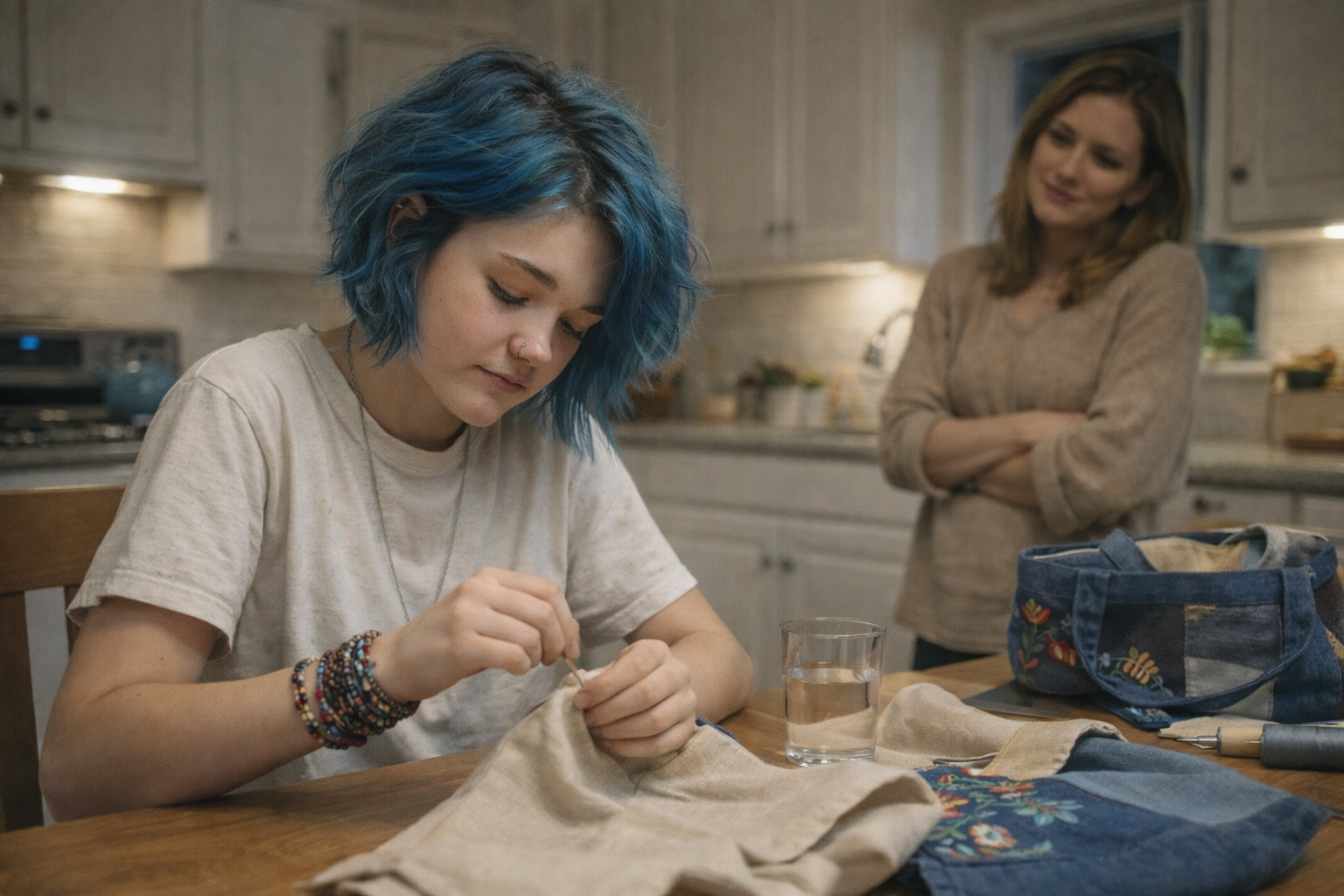
She signed up before I could blink, and that same night, I found her at the kitchen table with a needle, thread, and a pile of donated fabric she’d gotten from the community center.
“What are you making?” I asked.
“Tote bags, Mom!” she said, not looking up. “Reusable ones. So every dollar goes straight to families who need winter clothes.”
Ava stayed up late every night for two weeks. I’d come downstairs at 11 and find her there, squinting under the kitchen light, stitching careful, even seams. I told her she didn’t need to push so hard.
She just smiled and said, “People will actually use them, Mom.”
I watched my daughter work those nights and felt proud. But I couldn’t stop wondering who exactly was running that charity fair, and who was making my daughter’s life miserable at school.
I found out on a Wednesday. The school sent home a flyer with the fair details, and there at the bottom, under “Faculty Coordinator,” was a name I hadn’t seen written down in over 20 years.
Mrs. Mercer.
I read it twice. Then I sat down at the kitchen table and stayed very still for about a full minute.
I didn’t guess. I checked the school website from my bed. The moment her photo loaded, my stomach dropped.
It was Mrs. Mercer.
She hadn’t just come back into my orbit. She was in my daughter’s classroom, in the new town we’d built our lives around. She was the one calling Ava “not very bright.” She was the one who’d been doing to my child what she’d done to me at 13, and she’d probably been doing it for years without anyone saying a word.
I folded that flyer and put it in my pocket. I was going to that fair, and I was going to be ready.
The school gym smelled of cinnamon and popcorn the morning of the fair. Folding tables lined every wall, covered in handmade crafts and baked goods. The room buzzed with cheerful children and parents.
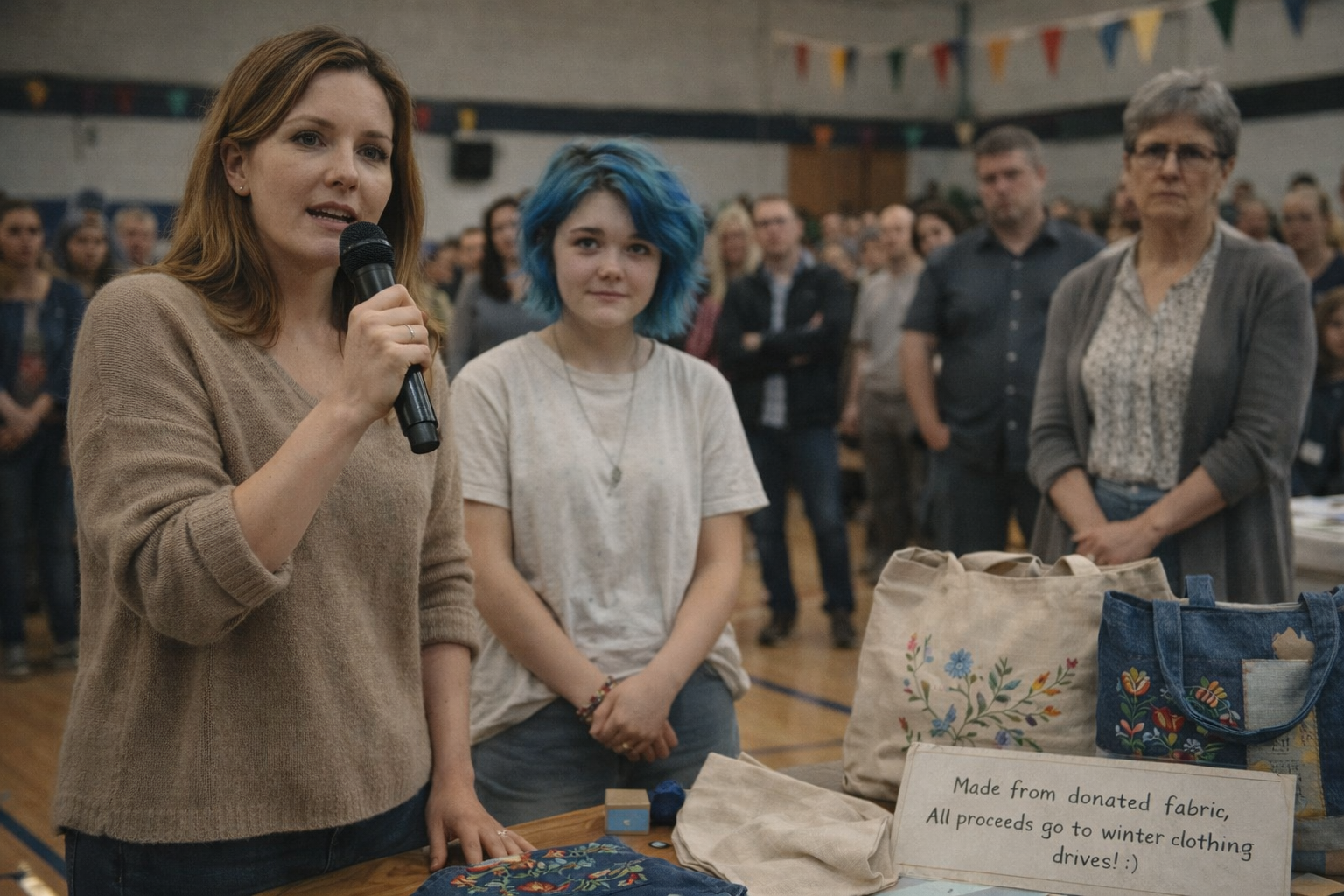
Ava’s table was near the entrance. She’d arranged 21 tote bags in two neat rows, with a small handwritten card that read:
“Made from donated fabric. All proceeds go to winter clothing drives! :)”
Within 20 minutes, people were lined up at her table. Parents held the bags up and turned them over, nodding with genuine appreciation. Ava was beaming.
I stood a few feet back, watching her, and for a moment I thought: maybe it’ll be fine. Maybe today is just a good day.
But my eyes kept scanning the crowd for the one face I’d dreaded all those years.
As if on cue, Mrs. Mercer appeared, moving toward us.
She looked older. Her hair thinner, streaked with gray. But the posture was the same. The same tight shoulders. The same way of walking into a room as if she’d already decided her opinion of everything in it.
Her eyes landed on me.
“Cathy?” she said.
“I was already planning to meet you, Mrs. Mercer. About my daughter.”
“Daughter?”
I pointed toward Ava.
“Oh, I see.”
She picked up one of the bags and held it between two fingers.
Then she leaned in slightly and said quietly,
“Well. Like mother, like daughter. Cheap fabric. Cheap work. Cheap standards.”
She set the bag down, smiled, and walked away, muttering that Ava “wasn’t as bright as the other students.”
I watched my daughter staring down at her table, hands pressed flat on the fabric she’d spent two weeks making.
And something I’d been sitting on for two decades finally stopped sitting.
Someone had just finished announcing the next event and set the microphone down.
I picked it up.
“I think everyone should hear this.”
The room quieted.
“Because Mrs. Mercer seems very concerned about standards.”
Heads turned.
“When I was 13, this same teacher stood in front of a classroom and told me that girls like me would grow up to be ‘broke, bitter, and embarrassing.'”
A ripple moved through the crowd.
“And today, she said something very similar to my daughter.”
I picked up one of the tote bags.
“This was made by a 14-year-old girl who stayed up every night for two weeks, using donated fabric, so that families she’s never met could have something useful this winter.”
The room was silent.
“She didn’t do it for praise. She didn’t do it for a grade. She did it because she thought it would help.”
Then I asked:
“How many of you have heard Mrs. Mercer speak to students that way?”
At first, no one moved.
Then one hand went up. Then another. Then more.
“This is completely inappropriate—” Mrs. Mercer began.
But a parent spoke up:
“No. What’s inappropriate is what you said to that girl.”
Another said:
“She told my son he wouldn’t make it past high school. He was 12.”
A student added:
“She told me I wasn’t worth the effort.”
It wasn’t chaos. Just people deciding they were done staying quiet.
“I’m not here to argue,” I said. “I just wanted the truth to be heard.”
Then I looked at her.
“You don’t get to stand in front of children and decide who they become.”
I took a breath.
“You told me what I’d become. And you were right about one thing—I’m not rich. But that doesn’t define my worth. I raised my daughter on my own. I worked hard for everything I have. And I don’t tear others down to feel better about myself.”
I held up the tote bag.
“This is what I raised. A girl who works hard. Who gives without being asked. Who believes that helping people matters.”
I looked at Ava.
“You spent years deciding what I would become. You were wrong.”
The room was silent—then applause began.
The principal stepped forward.
“Mrs. Mercer. We need to talk. Now.”
No one defended her.
By the end of the fair, every single one of Ava’s bags was gone.
Parents shook her hand. Kids told her the bags were cool. She sold out before anyone else.
That evening, Ava leaned against me.
“Mom… I was so scared.”
“I know.”
“Why weren’t you?”
I thought about being 13 again.
“Because I’ve been scared of her before,” I said softly.
“I just wasn’t anymore.”
Source: amomama.com