
It’s always been just me and Eli. His father passed away when Eli was four, and in the 11 years since, I’ve built my whole life around one question: Am I raising my son right?
Eli’s 15 now. He feels things deeply, notices things others don’t, and has never once pretended to be someone he isn’t. That last part, I think, is what bothered my mother-in-law, Diane, most.
Diane and I live two streets away from each other, close enough that she drops by whenever she pleases, often without calling ahead. Sometimes, she even stays in the guest house next door, which belongs to her.
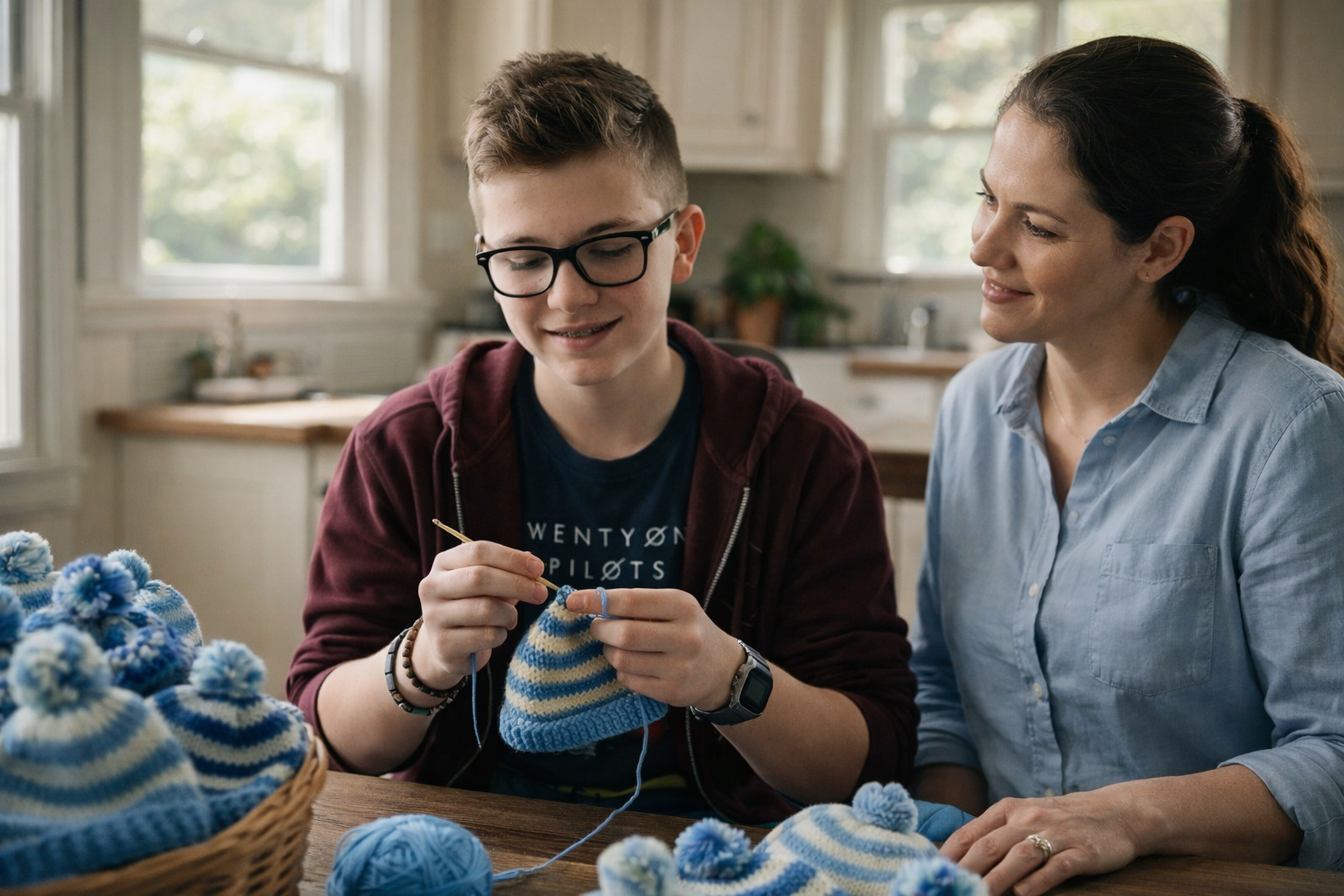
Eli taught himself to crochet two years ago from online tutorials, and he’s genuinely good at it. Diane has never once appreciated him.
“Boys don’t sit around doing needlework,” she said once from my doorway, watching Eli’s work at the kitchen table. “That’s not how you raise a man.”
My son didn’t look up. He just kept going, his face calm in that way that made me prouder than any trophy ever could.
“He’s raising himself just fine, Diane,” I told her, and she pressed her lips into that thin line she uses when she thinks I’m being foolish.
My mother-in-law never stopped visiting. She never stopped watching Eli with that look. And she never once asked him what he was making.
The tiny hats started on a quiet afternoon three months before Easter, when Eli first decided he wanted to make something for newborn babies.
Eli had gone to the hospital with his friend Rio, who’d taken a bad fall at the park. It wasn’t serious, just a sprain that needed imaging. He sat in the waiting room for a while, then wandered a little.
He found the neonatal unit by accident.
He told me about it that night at dinner. He said he’d pressed his face to the glass for a minute before a nurse gently redirected him. But in that minute, he’d seen newborn babies so small they didn’t look real, surrounded by wires and warmth in a silence where everyone was trying their very hardest.
“Some of them didn’t have anything on their heads, Mom,” Eli said.
I put my fork down.
“They just looked… cold,” he added. “Even under the lights.” He was quiet for a second, then looked up at me. “How did you keep me warm when I was little?”
I had to swallow before I could speak. “I crocheted hats for you, sweetheart. Every winter.”
He nodded slowly. “Then I can do that for them too… right, Mom?”
I just nodded, and Eli went to get his yarn.
He worked every night for three months. After homework, after dinner, sometimes past 10 o’clock.
“Just this one row, Mom,” he’d say.
I’d let him, because I knew what it was for.
Diane visited twice during that stretch. The first time she noticed the growing pile of small hats and picked one up without asking.
“How many is he making?” she asked.
“As many as he wants. He’s donating them.”
She set it back down. “It’s charity work, Georgina. For strangers. And he’s doing it with yarn like some kind of…” She didn’t finish the sentence, but I heard it anyway.
Eli finished the last hat last Saturday night. Seventeen in total. He arranged them carefully in a basket.
“Are they okay, Mom?”
“They’re perfect, baby.”
“Those babies… they need something warm.”
I almost told him how proud I was, but the moment felt too quiet for a big speech. I just put my hand on his shoulder.
The basket sat by the front door, ready for the morning.
Diane came that night without warning.
“I don’t know why you encourage this. You’re not doing your son any favors.”
“I think you should go home, Diane. It’s Easter tomorrow… maybe try being kinder than you were today.”
“Can I use your restroom?” she asked.
I pointed down the hall. As she walked, her gaze lingered on the basket.
I didn’t think much of it. I went upstairs and told her to close the door when she left.
“I will… don’t worry. It’s late anyway. I’ll just stay in the guest house tonight.”
By morning, the basket was gone.
I noticed the absence immediately. I checked everywhere.
Eli came down. “Mom… the caps… where are they?”
We searched. Then the smell hit us.
Burning.
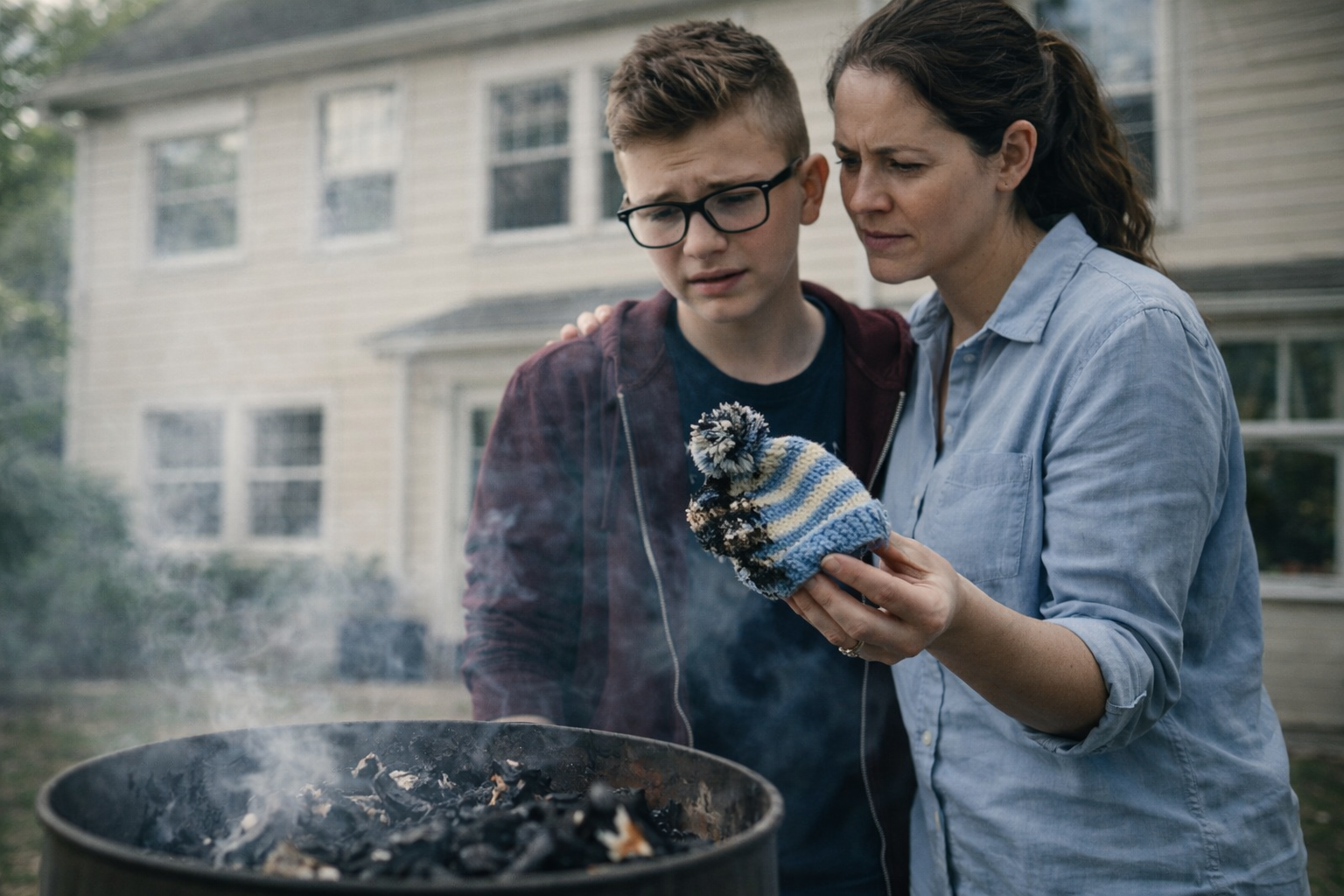
We followed it to Diane’s backyard. A metal bin sat there, still smoldering.
Inside were burned yarn and the blackened remains of small hats… 17 of them.
Eli stood behind me, silent.
Diane came out.
“I took them out last night,” she said.
“You took them?”
“I did what needed doing. That hobby of his is embarrassing enough without him carting charity baskets around town like some kind of peasant project. I did Eli a favor.”
My son’s voice broke.
“Grandma… why would you do that?”
That was it.
“You’re done,” I told her. “We’re done.”
Just then, a car pulled up. Then another.
The mayor stepped through the gate, followed by a reporter.
“What is that?” he asked.
“A controlled burn. Yard waste,” Diane replied.
I reached into the bin and pulled out a burned hat.
“These were crocheted by my 15-year-old son. Seventeen of them. For newborn babies in the neonatal unit… so they wouldn’t be cold.”
The mayor looked at Eli, then back at the bin.
I told him everything.
“My son wasn’t embarrassed. He was trying to be someone I’d taught him to be.”
Diane tried to speak.
“It was just yarn—”
“Those hats were going to babies fighting to stay alive,” the mayor said. “And you decided to destroy them.”
“We’ll be looking into this further.”
Silence fell.
Then Eli spoke.
“There was one… a really small baby… with a blue blanket. His head was just bare. I thought about him the whole time… I kept thinking he must be cold.”
No one moved.
The mayor placed a hand on Eli’s shoulder.
I stepped beside my son. “They still need them. You still have yarn.”
“But I don’t have time, Mom. Today’s Easter.”
“You could finish later… maybe Christmas.”
He nodded… then said quietly, “But they need them now.”
The story ran on the local news.
By afternoon, bags of yarn appeared on our porch. A note from the hospital asked if Eli would make more.
His classmates showed up. Then neighbors. Then grandmothers.
They sat together, crocheting, laughing softly.
Diane stood on her porch, watching. No one spoke to her.
Inside, Eli was counting hats, amazed as the number passed 17.
By evening, we had 37.
We walked into the neonatal unit with the basket.
A nurse took one and gently placed it on a tiny baby.
Eli watched, eyes shining.
“That one… looks warmer.”
I put my hand on his shoulder.
“That’s because of you, sweetheart.”
He didn’t answer. He just smiled.
My son wanted to keep those babies warm.
And somehow, that reminded an entire town what warmth is supposed to look like.

Source: amomama.com