
I sent my teenage daughter to my mother-in-law for Easter, thinking she’d be safe. At 2:14 a.m., a sheriff called and told me my daughter was at the station. He wouldn’t say what happened. I raced there, preparing for the worst—because my heart told me this wasn’t a call I’d ever forget.
I sat straight up in bed, my heart pounding. Lily was supposed to be at her grandmother Kathy’s house for Easter break, safe in the guest room.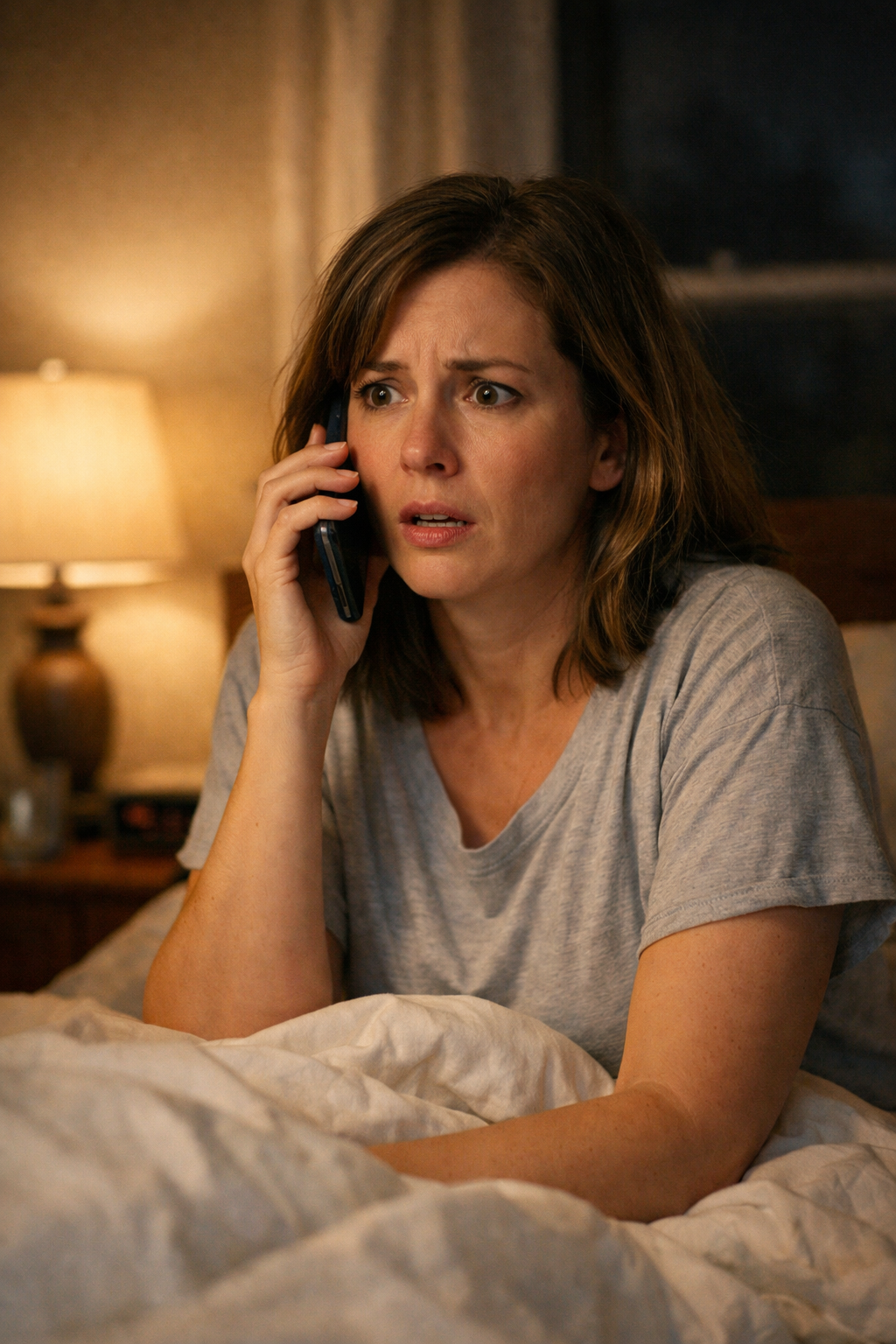
Instead, a sheriff was telling me to come immediately.
“Is she hurt?” I asked.
There was a pause—just long enough to make me feel sick.
“Ma’am, your daughter is here. She is safe right now. But I need you to come in.”
Safe right now. Those words made it worse. When someone says that, all you hear is what might’ve happened before.
I was out of bed before the call ended. I called Kathy. No answer. Her phone rang and rang until voicemail picked up.
Kathy had insisted Lily stay with her.
“You baby that girl, Maddie,” she’d said days earlier. “She needs structure. Real discipline.”
Maybe she was right. Maybe raising Lily alone after Lewis died had made me too soft.
But now, racing through empty roads in the dark, one thought wouldn’t leave me:
What if sending Lily there was a mistake?
I reached the station, barely remembering how I parked.
Inside, Lily was sitting alone at a metal table, hunched over, trying to disappear behind her hair.
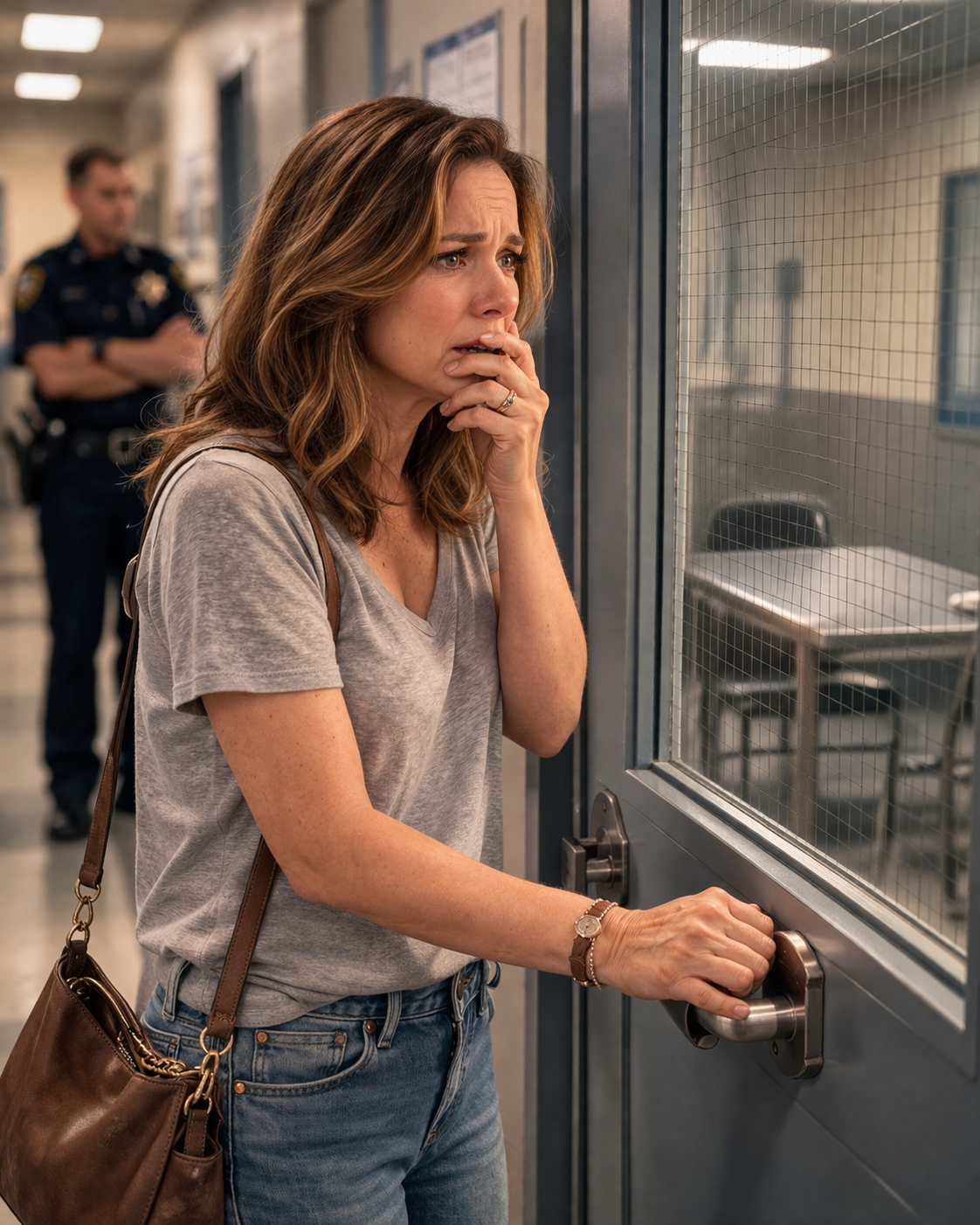
I rushed forward—but the sheriff stopped me gently.
“Ma’am, I think you should sit down before we explain what happened.”
“Just tell me,” I said, shaking.
He nodded.
“Your daughter is not in trouble.”
I blinked.
“But what she did tonight… could’ve gone very differently.”
My stomach dropped.
“We got a call about a vehicle driving erratically around 1:15 a.m. When we caught up, we realized the driver was a minor.”
“That was Lily?”
“Yes.”
“She was driving?”
“She wasn’t running from us,” he said. “She was trying to get somewhere.”
“Where?”
“The hospital.”
Everything inside me went cold.
The sheriff continued:
“Your daughter woke up around 1 a.m. She heard a noise downstairs. When she checked, she found Kathy on the kitchen floor. She wasn’t fully conscious and couldn’t get up.”
My hand flew to my mouth.
“Lily did the right thing first. She called emergency services. But she panicked, couldn’t clearly give the address, and her phone battery died.”
Kathy’s house was isolated. No neighbors nearby.
“She stood there,” the sheriff said, “looking at her grandmother, the door… and the car keys. Waiting felt too long.”
My eyes burned as I looked through the glass at Lily.
“She helped Kathy up. Got her shoes on. Walked her to the car. Buckled her in.”
“She did that alone?”
“Yes. And she was terrified the entire time.”
I let out a broken breath. “She’s 14…”
“She kept talking to her grandmother while driving,” he added. “‘Please stay with me. I’m almost there.’”
That was the moment I broke.
“Our unit tried to stop her,” he continued. “She didn’t pull over right away—not because she refused, but because she thought stopping would delay help.”
He looked at me carefully.
“Ma’am… your daughter wasn’t running from us. She was trying to save your mother-in-law’s life.”
I could barely stand.
“Is Kathy…?”
“She’s stable.”
Tears came instantly.
“You can go in now.”
I opened the door.
Lily looked up, and the second she saw me, her face crumpled.
“Mom…”
I pulled her into my arms. “I’m here.”
“I didn’t know what else to do,” she cried. “I thought if I waited, something worse would happen.”
I held her face in my hands.
“I know, baby.”
“Why didn’t you wait for help?” I asked softly.
Her chin trembled.
“Because I couldn’t just stand there… Grandma needed me.”
There was no defiance in her voice. Only fear—and love.
Then she said quietly:
“You always tell me not to ignore it when something feels really wrong.”
I froze.
She was right. I had said that—so many times.
I let out a shaky breath.
“That’s not exactly what I meant about driving laws,” I said, smiling through tears.
She gave a small, broken laugh.
“I just did what I could remember.”
We went straight to the hospital.
The doctor met us.
“Kathy had a stroke. Time mattered. If she had arrived later, the outcome could’ve been much worse.”
Lily squeezed my hand.
In the hospital room, Kathy looked small, fragile.
When she saw Lily, her eyes filled.
“You stayed with me,” she whispered.
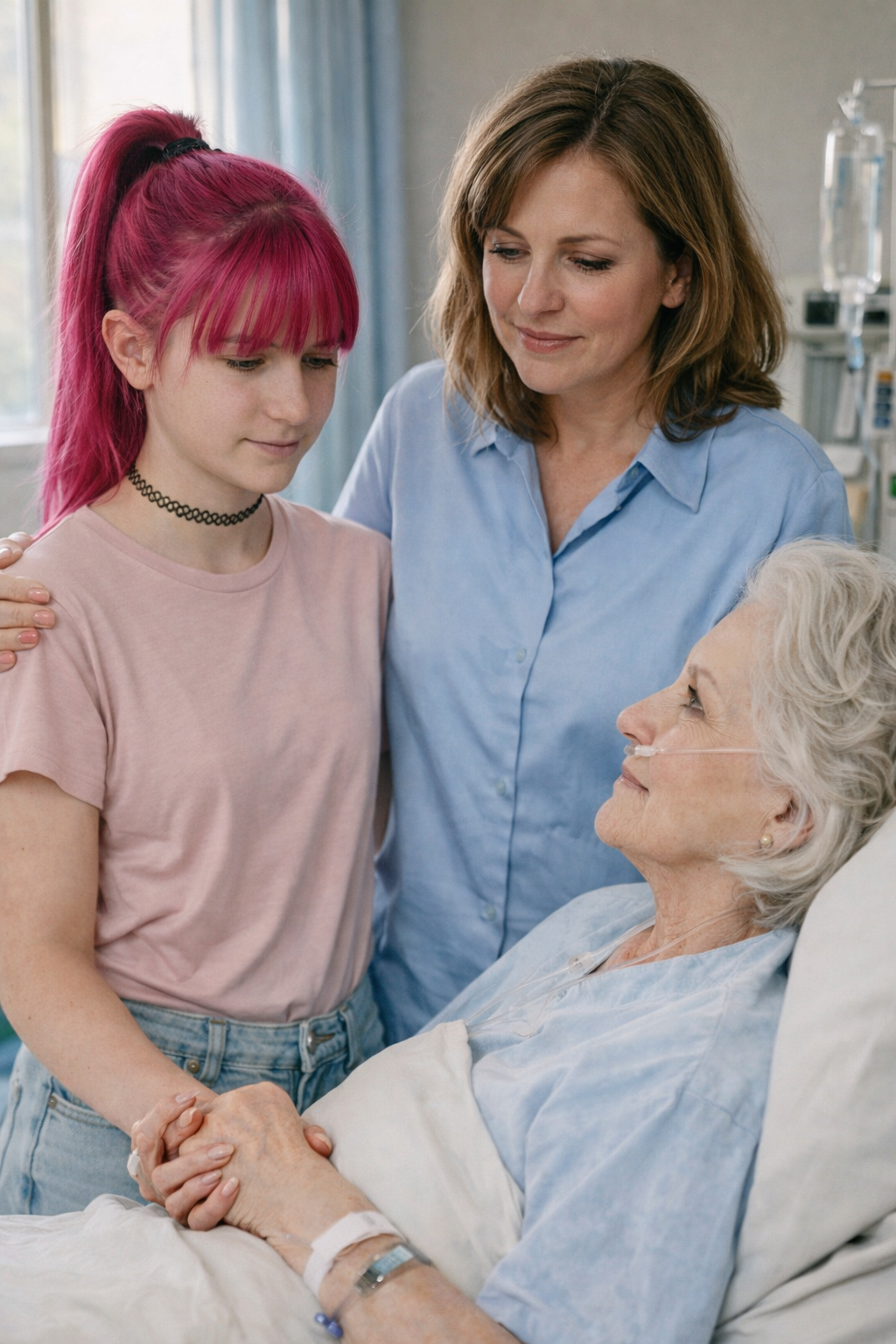
Lily nodded.
Then Kathy looked at me—and I saw it clearly: regret.
“I was wrong,” she said. “About you. About how you raised her.”
She turned back to Lily.
“You didn’t raise her wrong, Maddie… you raised her to be brave.”
That went straight through me.
I smiled through tears. “She definitely didn’t get the driving from me.”
Kathy let out a faint laugh.
“Thank you, sweetheart,” she whispered to Lily.
“You don’t have to thank me,” Lily said.
“Yes… I do.”
Later, Lily fell asleep beside her grandmother, still holding her hand.
I tucked the blanket around her and stood there watching.
Kathy spoke softly:
“I thought discipline was what would protect her… but maybe love taught her faster.”
I looked at my daughter—really looked.
All the times I doubted myself came rushing back.
When the morning light touched Lily’s face, she woke and looked up at me.
“Are you still mad at me?” she whispered.
I leaned down and kissed her forehead.
“No, baby… I’m just very, very proud of you.”
I thought my daughter needed someone stricter.
I didn’t realize she already knew exactly what to do when it mattered most.
Source: amomama.com