
A week after I handed a tired young mother four dollars at the gas station, an envelope showed up at my work with my name written across the front. There was no return address, no explanation. Just a simple white envelope that would end up changing the way I saw kindness forever.
I’m Ross, 49 years old. I’ve got a wife named Lydia, two kids who outgrow their shoes faster than I can replace them, and a mortgage that still feels too big for a house that’s honestly too small. But it’s ours—and that counts.
A few years ago, the factory I worked at for over two decades shut down overnight. One morning we clocked in like usual, and by the afternoon, the gates were locked with a paper taped outside announcing bankruptcy. Twenty-three years of my life—gone just like that.
I tried everything to find work. Sent resumes, knocked on doors, made calls until my voice gave out. But at my age, most jobs offered were minimum wage or night shifts. The younger guys got picked up quickly. Me? Too old for the good jobs, too proud to sit still.
Now I work the late shift at a gas station off Highway 52. It’s the kind of place where truckers stop for coffee and a bathroom break. The lights flicker sometimes, and the air always smells like overcooked hot dogs.
Most nights are quiet. Just me, the hum of fluorescent lights, and the same three songs looping on the radio.
That night started like any other. A few customers passed through early. By 10:30 p.m., it was silent again. I was restocking cigarettes behind the counter when the door chimed.
It was 11:30 when she walked in.
She carried a sleeping child on her shoulder—a little boy limp with exhaustion. She moved carefully, like even breathing too loudly might wake him.
Her hair was messy, tied back loosely. Her sweatshirt was stained. Her eyes looked hollow.
She didn’t speak. Just walked the aisles slowly, balancing the boy while picking up a carton of milk, a loaf of bread, and a pack of diapers. Nothing extra.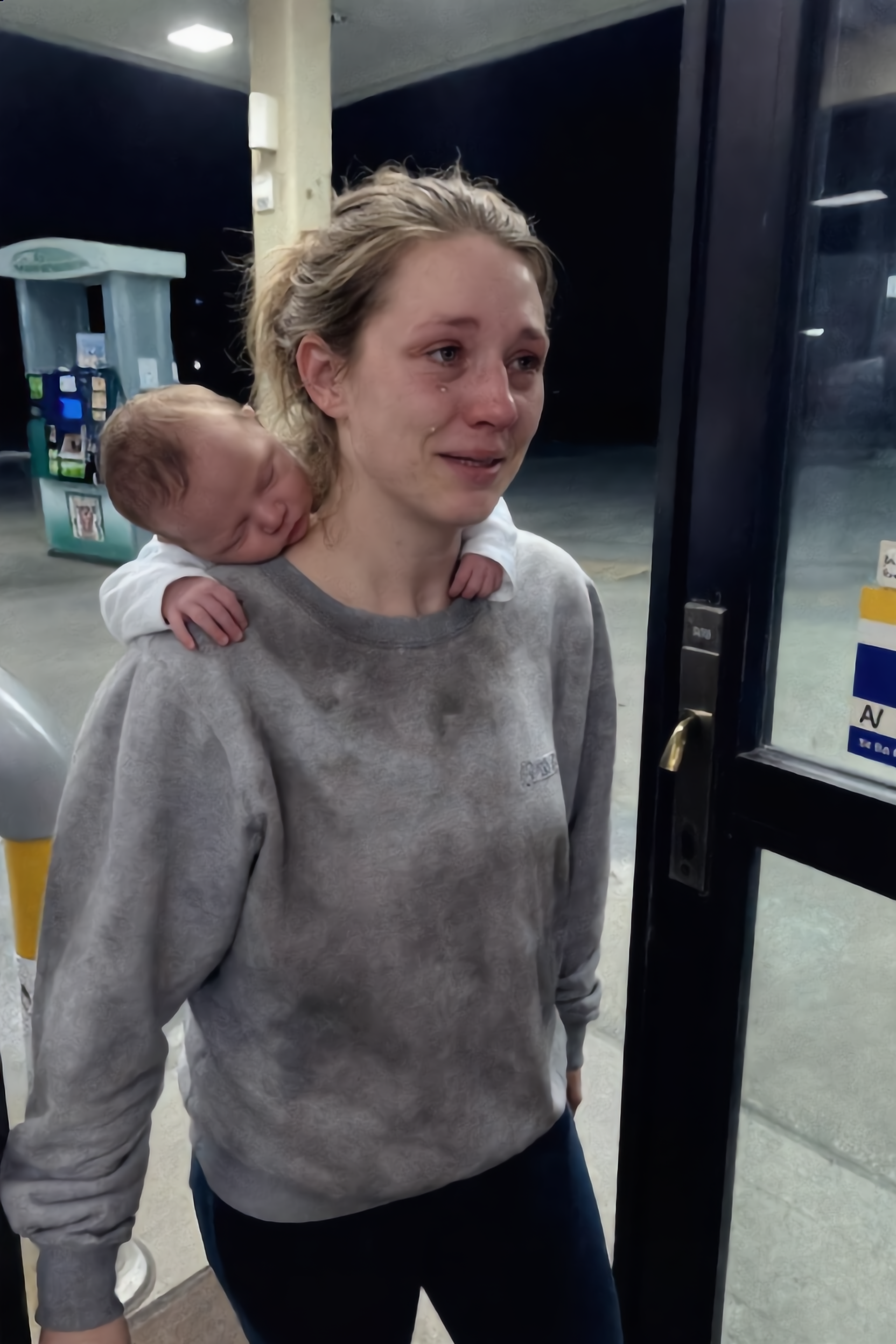
At the counter, she set everything down gently and shifted the child on her shoulder. I scanned the items.
“Fourteen seventy-two,” I said.
She searched her purse with one hand, pulling out crumpled bills, counting twice. Then she looked up at me, eyes glistening.
“I’m short by four dollars,” she whispered. “Can I… put the diapers back?”
I didn’t think. I just said it.
“It’s fine. I’ve got it.”
She froze, like she didn’t believe me.
“It’s late,” I said, placing four dollars from my own wallet into the register. “Just get home safe.”
For a moment, I thought she might cry. She nodded quickly, grabbed her bag, and left.
Through the window, I watched her clutch that boy tightly as she got into an old sedan.
Then she was gone. And everything went quiet again.
The week passed like any other.
Then the following Thursday, my manager called me into his office.
“Ross, did you cover someone’s groceries last Friday night?”
My stomach dropped. Had I broken a rule?
“Yeah… I did. I paid for it myself—”
He shook his head. “That’s not the issue.”
Then he handed me a white envelope.
“This came for you.”
My name was written neatly on the front.
I opened it.
Inside was a folded note… and a check.
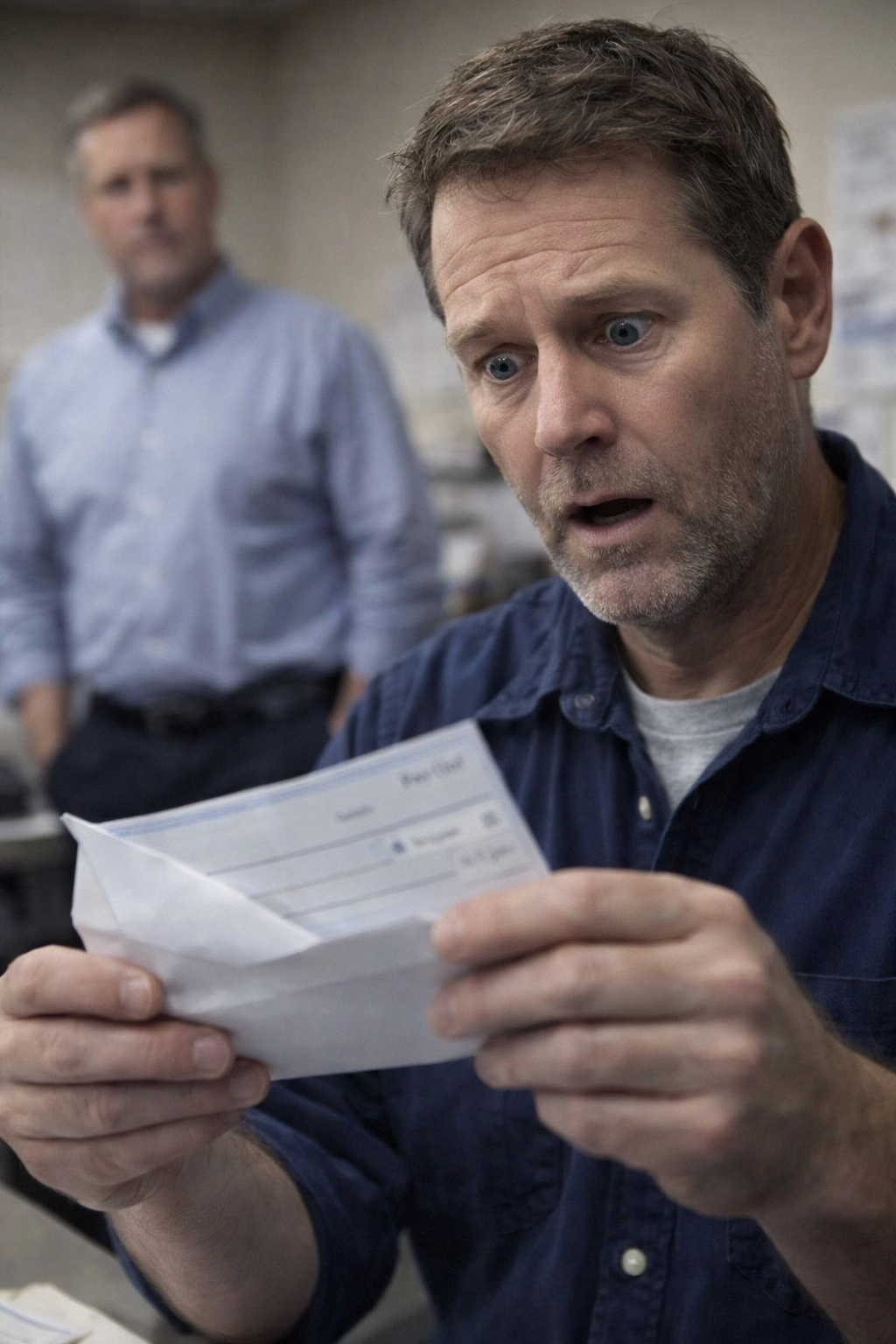
Five thousand dollars.
I read it three times to make sure.
The note said:
“Dear Ross,
Thank you for your kindness to my daughter, Emily. You have no idea how much you helped her that night. She made it home safe because of you. This is a small token of our gratitude. We would also love to have you over for lunch this Sunday.”
There was an address at the bottom.
I just stood there, hands shaking.
When I got home, Lydia took one look at my face and knew something was wrong.
I handed her the envelope.
She read the check, covered her mouth.
“Oh my God… Ross, where did this come from?”
So I told her everything.
The woman. The child. The four dollars.
Lydia read the note again, tears in her eyes.
“You have to go on Sunday,” she said. “And I need you to hear this—I’m proud of you. You helped someone when they needed it most. That’s who you are.”
“I didn’t do it for this.”
“I know,” she said. “That’s exactly why you deserve it.”
Sunday came fast.
The address led me to a neighborhood with big houses, white fences, and perfectly trimmed hedges.
An older couple was waiting on the porch.
“You’re Ross?” the man asked, shaking my hand. “I’m Robert. This is my wife, Margaret.”
Margaret hugged me immediately.
Inside, the house smelled like home-cooked food. We sat down, and after a moment, Robert began.
“The woman you helped… that’s our daughter, Emily.”
Margaret squeezed his hand.
“She was in a bad marriage,” Robert continued. “Controlling. Isolating. We barely saw her for two years. But recently, she found the strength to leave.”
“That night,” Margaret added softly, “she was driving to us. With almost nothing. Just her son and what she had in her wallet.”
“When she didn’t have enough money,” Robert said, “she thought she had already failed. But then you helped her. No questions. No judgment.”
Margaret’s voice broke.
“When she arrived, she couldn’t stop crying. She kept talking about ‘the man at the gas station’ who told her to get home safe. She said it was the first time in years someone treated her like a person.”
I didn’t know what to say.
“We sent that check because you deserve it,” Robert said. “You helped bring our daughter home.”
“I can’t accept that,” I said. “I just did what anyone would do.”
“But not everyone does,” Margaret said gently. “You did.”
We talked for hours.
When I left, Margaret hugged me again.
“You’re a good man, Ross.”
Driving home, I kept thinking about that night.
How small it felt to me… and how big it was for someone else.
When I walked in, Lydia looked up.
“How did it go?”
I sat beside her and took her hand.
“I thought I was doing something small,” I said. “Turns out… it wasn’t.”
She smiled.
“That’s how it works sometimes.”
I kept the check for two days before depositing it.
We paid bills. Fixed the car. Bought the kids new shoes without worrying.
But more than the money, what stayed with me was this:
Sometimes the smallest acts—the ones you don’t even think about—are the ones that matter most.
Because they show who you really are.
I still work that night shift.
Still ring up the same kinds of people.
But now… when someone walks in looking worn down by life, I pay a little more attention.
Because you never know when four dollars—and a little kindness—might be exactly what someone needs to make it home.